Title: Re-examining Sahams (Sensitive Points) in Astrology: Chart-Specific Polarity
Author: Subhamoy Bhattacharjee
First Published: 27 December 2025
Original Publication: https://www.talk2destiny.co.in/sahams
Copyright © 2025 Subhamoy Bhattacharjee
All Rights Reserved

Sahamas (also known as sensitive points or Arabic Parts) occupy a unique position in astrological practice, bridging mathematical construction and symbolic interpretation. Despite their theoretical elegance, many practitioners observe that transits of slow-moving planets over Sahamas often fail to produce tangible results. This article argues that the primary reason for this inconsistency lies not in the concept of Sahamas themselves, but in the universal assumption of benefic and malefic planets embedded in their classical formulas. By demonstrating the chart-relative nature of planetary auspiciousness and proposing a refined, functionally consistent framework, this paper aims to restore Sahamas as reliable predictive tools.
In practical astrology, a repeated observation emerges across decades of chart analysis:
major planetary transits over Sahamas frequently do not correspond with significant life events, even when the transiting planet is Jupiter, Saturn, or the lunar nodes.
This raises a fundamental question for astrologers and researchers alike:
If Sahamas truly represent sensitive focal points of destiny, why do powerful transits so often pass unnoticed?
The common explanation — that transits are weak or overridden by other factors — does not sufficiently account for the systematic nature of this failure. Instead, the issue lies deeper, at the level of how Sahamas are defined.
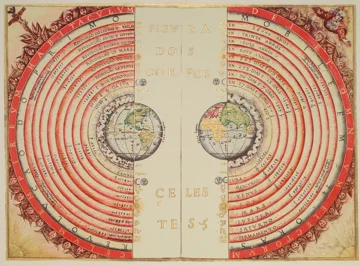
Traditionally, Sahamas are calculated using linear combinations of three points, for example:
Ascendant + Moon − Sun
This formula is widely used for the so-called Good Fortune or Good Luck Sahama. Embedded within this formula is an implicit assumption:
Similar assumptions appear across Sahama formulas: Jupiter and Venus as default benefics, Saturn and Mars as default malefics.
In reality, planetary effects are never universal. They are always chart-specific.
Yet classical Sahama formulas treat these planets as fixed in polarity, regardless of the individual horoscope.
Long-term observation reveals:
The universal polarity likely arose from:
They were not designed for:
To restore Sahamas as effective predictive tools, the following principle must be adopted:
Planetary auspiciousness is chart-relative, not universal.
Accordingly, the Good Fortune Sahama should be defined not as:
Ascendant + Moon − Sun
but conceptually as:
Ascendant + most auspicious planet for fortune − most obstructive planet for fortune (in that specific chart)
This preserves:
To maintain rigor and reproducibility, “most auspicious” and “most inauspicious” should not be chosen arbitrarily.
They should be determined by:
This transforms Sahamas from static formulas into context-aware sensitive points.
This framework has direct implications for:
Software that blindly applies universal benefic–malefic assumptions will inevitably underperform. Adaptive Sahama calculation, based on chart-specific functional polarity, offers a path toward measurable improvement in accuracy.
The inconsistent performance of Sahamas is not evidence of their weakness, but of an outdated assumption embedded in their construction.
By replacing universal benefic–malefic polarity with chart-specific functional evaluation, Sahamas regain:
This is not a rejection of tradition, but its natural evolution — guided by experience, logic, and long-term observation.